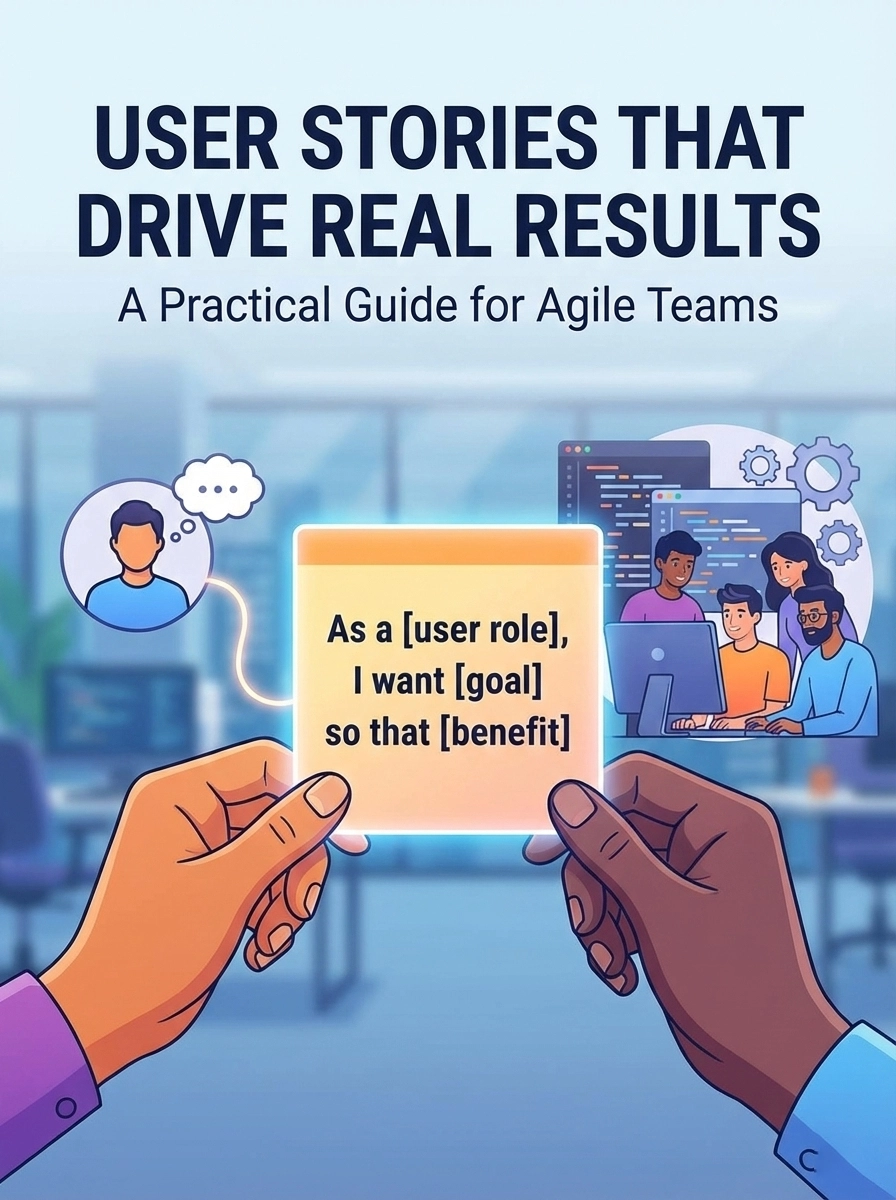
A practical guide to creating user stories your development team will thank you for!
In Agile product development, communication is everything. And one of the most powerful tools for aligning your team around the right problems is the User Story.
Table of Contents
But here’s the catch:
- Not all user stories are created equal.
- Well-crafted user stories are clear, valuable, testable, and they make a real difference in delivery.
Let’s break it down.
What Is a User Story?
A User Story is a short, simple description of a feature written from the perspective of the end-user. It helps the development team understand what the user needs and why it matters.
Standard Format: “As a [user role], I want [goal] so that [benefit].”Real Examples:
As a customer, I want to track my order status so that I can know when to expect delivery.

As a user, I want to log in with my fingerprint so I can quickly access my account.
These statements may be short, but when written well, they pack strategic clarity.
How to Write Good User Stories
To make your user stories actionable and Agile-ready, follow these key principles:
- Clear and concise
- Focused on user value
- Testable with acceptance criteria
- Small enough for one sprint
Use the INVEST Method
The INVEST acronym helps ensure your user stories are development-ready:
- I – Independent: Can be built without relying on other stories
- N – Negotiable: Scope is flexible and open to iteration
- V – Valuable: Delivers measurable value to the user or business
- E – Estimable: Can be estimated with reasonable accuracy
- S – Small: Fits within a sprint or dev cycle
- T – Testable: Has clear acceptance criteria
Practical Application: E-commerce User Stories
Imagine you’re a Business Analyst on an e-commerce product team. Here’s how you’d apply INVEST:
User Story 1: Login Feature
As a customer, I want to log into my account using my email and password so I can access my past orders.Acceptance Criteria:
- Login page includes email and password fields
- Displays error for incorrect credentials
- Redirects to dashboard after successful login
User Story 2: Order Tracking
As a customer, I want to track my order status so I can know when to expect delivery.Acceptance Criteria:
- Tracking link on confirmation page
- Real-time status updates
- Email notification when order is shipped
Final Thoughts
User stories may seem simple—but when written with clarity and intent, they align your team, reduce back-and-forth, and ultimately lead to better products. How do you ensure your user stories are effective? Let’s share strategies in the comments
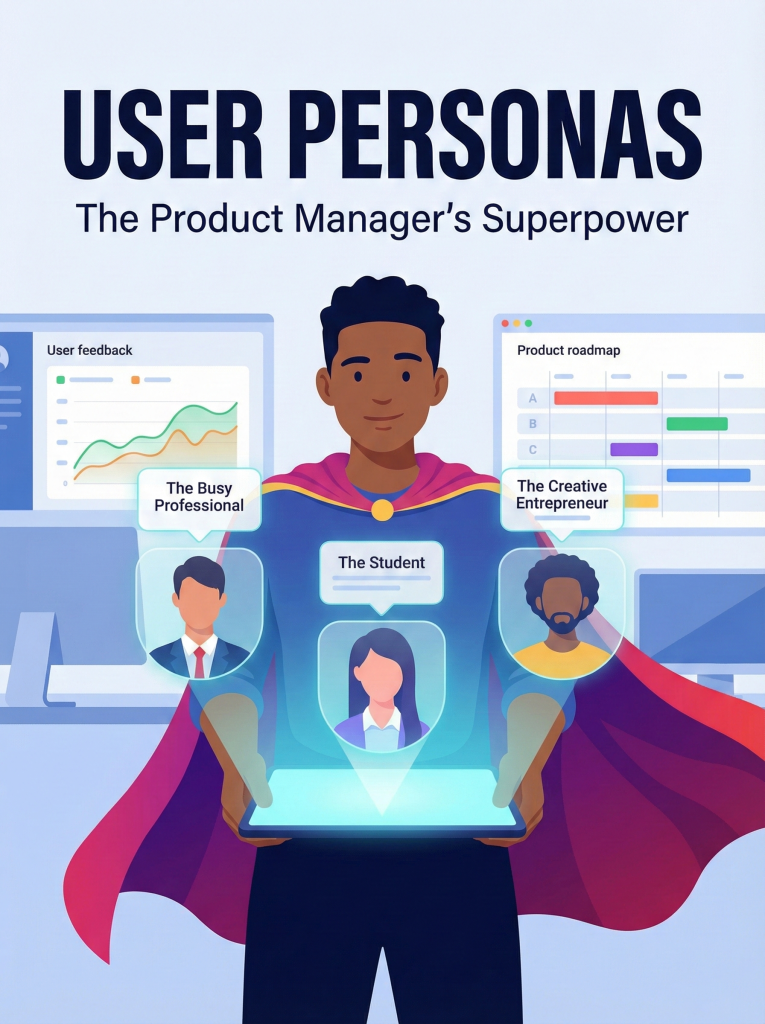
Also Read About – User Personas:
User Personas: Why User Personas Are the Product Manager’s Superpower
This is an updated version of my Article on LinkedIn: https://www.linkedin.com/pulse/writing-user-stories-drive-real-results-mohd-aman-8ckqc